Sunday, June 17, 2018

Isle of Iona

My stay on Iona was for 5 nights. I stayed at the Argyll Hotel which is centrally located and creates wonderful meals. Iona is said to be a "thin place" with a light veil between heaven and earth.  St. Columba landed here in 563 from Ireland and founded a monastery where the Book of Kells was written. It moved to Kells to keep it from the Vikings who constantly raided the island 800-900. A Benedictine abbey was founded in 1200.  There is also the ruins of a nunnery dating back to the same period. All the skeletons found were women.  There are a few walks to either end of the isle which I took and a boat ride to Staffa which is about 1 hour north. It goes to a small, tall basalt island where there are caves and puffins.  I attended various services at the abbey and the Bishop's House (Anglican). They were not particularly memorable.

Iona is owned by the Dukes of Argyll.  They donated the land of the abbey to the Scottish Historic Society or something.  A man named Rev. George McLeod started an ecumenical Christian community in 1938 to try to raise money to maintain the abbey and help poor folks in Glasgow.  They run the church services at the abbey and are into peace, justice, and nature issues.  They land they do not use is used by crofter to graze sheep.  The biggest worry on my walks was not stepping in sheep dung.

June 14
The 1:25 drive across the island of Mull was just gorgeous. Might be worth returning to rent a cottage there for a week or two. Getting on and off the little ferry to Iona was like timing when to enter waves because the water came up way above the entry point.

View from bus on Mull


Iona ferry


June 15.   14,243 steps 
I waked to the north end of the island and was blown away by the beauty every where you looked. I had to walk back in pouring rain and wind. The sun came back out and I took a boat ride to Staffa, about an hour north of Iona.  It was the inspiration for Mendelssohn's Hebrides Overature. This small island is made of basalt that cooled quickly. The rock is in columns. I scrambled over rocks to see Fingal's Cave at the south end, then went to the north end to see the puffins roosting in little holes in the cliff.

The small town is on the east side in the middle of coast. It's called Baile Mor.

On walk north

Stone Celtic crosses abound on Iona. 
Pilgrims prayed at each on their way to St. Columba's shrine.

Staffa

Fingal's Cave on Staffa

Puffin in north end of Staffa

I loved watching the waves come through this small channel on Staffa.


June 16.   16,891 steps
On Saturday I walked to the south end to the bay where St. Columba landed.  It was a 4-hour rt hike through meadows and over rocky craigs. Very beautiful in all parts even the natural golf course that the sheep strolled over.

On walk to St. Columba's Bay (south end of Iona)

View of St. Columba's Bay on trail

St. Columba's Bay (very rocky)


June 17.  4,689 steps
The weather was quite poor on Sunday. I went to the abbey for a Eucharist then wandered about this rebuilt 1200 monastery.  There is a shrine to St Columba but it was originally made of timber. It was built of stone about 500 years later. I walked back through the hotel's gardens where they grow the food we eat -very impressive.  It rained all afternoon and evening so I read a book from the hotel about the Holy Maid of Kent and started writing this blog post.  The internet was insufficient to upload the post.

Nunnery ruins

Benedictine Abbey, restored - note the ferns growing out of the wall

St. Columba's Shrine attached to the abbey

Stone grave covers in the museum

Chapel by the Abbey


June 18.  12,747 steps
The Internet was down all of over the island so I couldn't see the weather forecast. I went ahead and walked up to the top of Dun I (101m). They said there was a clear easy path..... there were lots of paths - made by sheep. I got to the top and also walked over to the Well o' Eternal Youth. Then I returned downhill using 3-point contact in several places.  I also walked back out to the north end of the island and strolled along the NE beach.

Heilan' Coo

Cairn on top of Dun I

Well o' Eternal Youth on Dun I

Wild Iris - all over Iona


Beach on the northeast side of Iona

Stopped into a gallery and snapped a pic of this painting by one of the Scottish Colorists.  I'm going to try to copy it.

Painting by Scottish Colorists from last Century


Food
I mostly ate at the Argyll Hotel because the food was so delicious.  I had a smoked Guinea fowl Caesar salad with brioche croutons, broad bean salsa, bacon candy, and crispy whitebait. Some of my main dishes included 1) Iona hogget (lamb), potato croquettes, garden broad bean salad, roast garlic & herb emulsion, forestiere, smoked muscle salsa, toasted sesame seeds; 2) pan seared salmon with little potatoes and cockles in a tomato and langostine broth; 3) pan seared halibut with micro greens on Parmesan & herb polenta with tomatoes, flowers, and cockles; and Jersey Royal potatoes with a chickpea tangine, mint & sumac creme fraiche, roast apricot purée, and Swiss chard.


Lamb at Argyll Hotel

Salmon at Argyll Hotel

Goat panna cotta with chocolate pieces, raspberry compote and asparagus sponge

Halibut at Argyll Hotel

Lamb chops at Martyr's Bay Restaurant 

June 19.  5,696 steps
I got the early ferry to Mull, cross-island bus, ferry to Oban, and train to Glasgow, arriving around 4pm. My hotel in Glasgow, Hotel Indigo, was very fancy.  I walked a block away and got a sushi burrito for dinner, really too big to eat easily.

Sushi burrito in Glasgow


Scottish breakfast - bacon, eggs, and a Tattie Scone
This was at Hotel Indigo in Glasgow but I ate this a lot on Iona.
 I asked them not to bring me the baked beans, black pudding,
or haggis that usually comes with breakfast.


"Giant's Tears" - This was taken from the cross-Mull bus.

Scotland Concert Tour


The Carolina International Chorale (CIC) under the direction of Sue Klausmeyer completed an 8-day tour of Scotland. We gave concerts in Stirling, Inverness, and Edinburgh. The rest of the time we toured castles, gardens, and royal residences. One day we took a ferry to Arran and toured a scotch distillery.  Our tour guide, Richard, always dressed in his kilt, was quite wonderful. Afterwards I went to the Isle of Iona for 5 nights but I will do a separate post for that part.  The weather for us was in the 50's F and not any rain. I think we were lucky.


CIC in St. Giles' in Edinburgh

My roomie, Kim, and me at St. Giles'


June 5. 4,048 steps
I traveled to Dulles to get the flight to Glasgow via Iceland. I don't recommend IcelandAir.

June 6.  3,589 steps
I met the tour for our afternoon rehearsal. For dinner we went to the bagpipe center being piped in and out of dinner.

Piper at our Welcome Dinner in Glasgow


June 7.  7,786 steps
We bused up to Stirling to view Bannockburn battlefield, had a lovely salmon lunch, then gave our first concert at Holy Rude Church (built in 1555).  It was the site of the coronation of Mary Stuart's infant son, James VI of Scotland (1567).  The sermon was preached by John Knox in a Protestant Rite. Afterwards we toured the castle.  There were many more buildings open to tourists than the last time I was there 15 years ago.  Halls created by King James IV and V were quite wonderful. The kitchen was also interesting.  The Battle of Bannockburn in 1314 was a significant victory led by the King of the Scots, Robert the Bruce, in the First War of Scottish Independence, fought against Edward II forces.  The English had seized Stirling Castle and the Bruce and his forces fought English reinforcements to a decisive victory and kicked the English out.

Statue of Robert the Bruce near Stirling Castle


View from Stirling Castle of the monument to William Wallace


June 8.  5,924 steps
We bused to take a ferry to Arran. We toured beautiful gardens at Brodick Castle then a scotch distillery.  The ceiling below was in a summer house and it was made if sticks and pine cones.  Somewhere (can't recall which place) had a castle that belonged to our ancestors, the FitzAlans.

Summer house at Brodick Castle, Arran


Pinecone ceiling of summer house on Arran

Scotch Distillery on Arran


June 9.  6,522 steps
We left Glasgow heading for Inverness. We stopped at Inverarary Castle, home of the Clan Campbell. We drove up by Loch Lomond, through Glencoe and up to Ft. William, then up to Urquhart Castle ruins and Loch Ness.  There were three main castles needed to hold Scotland - Edinburgh, Stirling, and Urquhart.  The English destroyed Urquhart Castle pretty early. My roomie, Kim, and I ate at an Indian Restaurant near out hotel (Premier Inn River Ness) which was right on the River Ness.

View from Inverarary Castle, home to the Dukes of Argyll

Great Hall of Inverarary Castle

Three Sisters in Glencoe Valley


Me in the Glencoe Valley

Our tour guide, Richard, in his kilt

Urquhart Castle ruins on Loch Ness


June 10.  7,967 steps
We toured Culloden which was the last stand of Bonnie Prince Charlie, then had a wonderful pork lunch at Cawdor Tavern. The Battle of Culloden was the final confrontation of the Jacobite rising of 1745. On April 16, 1746, the Jacobite forces of Charles Edward Stuart (grandson of James VII and II) were decisively defeated by loyalist troops commanded by William Augustus, Duke of Cumberland (George III's brother). Between 1,500 and 2,000 Jacobites were killed or wounded in the brief battle whereas only about 300 government soldiers were killed or wounded.

 We toured Cawdor Castle and gardens, then prepared for our evening concert at Inverness Cathedral.  While waiting I attended a Gaelic Eucharist service.  I knew not to try to pronounce the consonants so I mostly sang the vowels. But soon I realized that not even are the vowels in Gaelic pronounced like ours.

Gardens at Cawdor Castle
More gardens at Cawdor Castle


Gypsy Caravan at Cawdor Castle


June 11.  5,268 steps
Monday we drove through the Cairngorms to tour Balmoral. The land was bought by Prince Albert and he designed a new castle, garden, stables, etc. The walk along the River Dee is especially tranquil.  Since QE2 spends 10 weeks here every year, the gardens are planted such that all is fresh by mid July. That includes flowers, herbs, vegetables, and cut flowers.  On the way to Edinburgh we also toured Braemar Castle, a small homey sort of castle.

Balmoral Castle, Summer home of the Queen built by Prince Albert

Teeny pinecones on walk down to the Dee from Balmoral

Rhododendrons along the walk next to the Dee

River Dee


June 12.  10,039 steps
We toured Edinburgh Castle in the morning then walked around in the afternoon. I retrieved my train tickets to Oban for the 14th where I got a nice beef and potato pasty for lunch.  That evening we gave our final concert at St. Giles' Cathedral. It was the best attended and best acoustics of all the places. Afterwards we had a chicken dinner nearby.

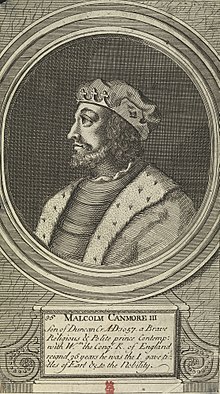
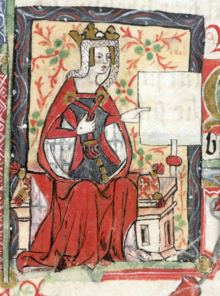
The oldest building in Edinburgh Castle is the chapel dedicated to St. Margaret, Queen of Scotland, by her son King David. Margaret was married to Malcolm III and they are our great...great grandparents (28 generations back - see below). Her story is so fascinating. I learned about her on my first trip to Scotland around 2006. She was the daughter of Edward Aethling and born in Hungary while her father and uncle were in exile from England during Cnut's reign. Edward returned with his family to get the throne back but timing was terrible. It was around the Battle of Hastings 1066. Edward died but Margaret's brother, Edgar, thought about hanging with the Normans but decided to return to Hungary.  Their ship ran aground in the Firth of Forth and Malcolm came to greet them and proposed to the Princess. She was very pious and spent most of her time in prayer and tending to the poor. They had many sons and a daughter, Edith (aka Matilda). We are descended from her and her husband, Henry I of England. The descent goes down through Henry II, John, Edward I, II, and III.  Edward III was the last king we descend thru via his son John of Gaunt. 

Window of St. Margaret in her chapel at Edinburgh Castle

St. Margaret's Chapel, oldest building still standing at Edinburgh Castle

Plague about the chapel


June 13.  5,969 steps
We toured the Royal Yacht Britannia docked at Leith. I particularly enjoyed searching for stuffed corgis in many of the rooms. I got them all at 14.  The yacht was really very nice. Each social or military rank had their own lounge with a cocktail bar.  While there were many ranks, there were not many guest quarters other than the Queen's rooms and Prince Philip's rooms.  Kim and I spent the afternoon at Holyroodhouse Palace touring the Stuart rooms of Mary and Charles II. We had a farewell dinner of roast beef at Merchants Restaurant.  

Add caption


Cathy and a corgi on the Royal Yacht

Corgi in the Yacht infirmary

Abbey remains at Holyroodhouse Palace

View up to the hill at Holyroodhouse Palace

Holyroodhouse Palace at the base of the Royal Mile in Edinburgh

Adam in his new kilt on the Royal Yacht


Soloists, Sue, Scott, and our guest violinist at St. Giles' Cathedral

Vaulted ceiling in nave of St. Giles' Cathedral


June 14.  7,539 steps
While the others left early, I had my breakfast and took a cab to Waverly train station where I got a train to Glasgow switching there for Oban.  Alas a horrible gale raged all night and the trains and ferries were disrupted. They bused us to Oban up the beautiful Loch Lomond where the rain had left wonderful waterfalls called the "Tears of the Giants". By the time I reached Oban, the first ferry of the day was ready to run at 4pm. I met the bus in Mull that traveled 1+ hours to get the short ferry to Iona.

Descent from St. Margaret, Queen of Scotland and Malcolm III, King of Scotland


Margaret of Wessex, Queen of Alba ca 1046-ca 1093 & Malcolm III, King of Scotland

StMargareth edinburgh castle2.jpg                           Malcolm III Engraving.jpg
|
|
|
|
|
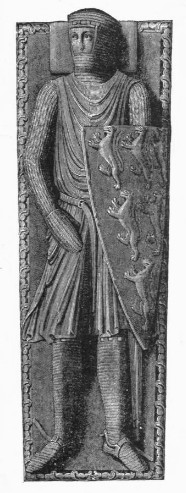
William II Longespee, Sir ca 1208-ca 1250

|
Ela Longespee ca 1227-/1299
|
Hugh Audley ca 1267-ca 1326
|
Alice Audley ca 1302-ca 1374
|
Ralph Neville, Sir ca 1336-ca 1362
|
Alexander Neville ca 1359-ca 1420
|
Alexander Neville, Sir ca 1390-ca 1457
|
Catherine Neville †1453/
|
Thomas Fairfax ca 1430-ca 1505
|
Thomas Fairfax, Sir ca 1476-ca 1521
|
Nicholas of Walton and Gilling Castle Fairfax, Sir ca 1496-ca 1571
|
Mary Fairfax ca 1529-
|
Mabel Curwen ca 1556-ca 1624
|
Ewan Christian, Deemster ca 1579-ca 1655
|
|
Patricius Christian ca 1644-ca 1687
|
Gilbert Robert Christian, Capt ca 1677-ca 1756
|
John Christian, immigrant PA ca 1715-ca 1779
|
Sallie Christian ca 1748-ca 1836
|
John C Wilson ca 1776-ca 1832
|
Alexander Hamilton Wilson ca 1829-ca 1902
|
William Edwin Wilson ca 1881-1952
|
John McConihay Wilson, Lt Cdr USN 1911-1989
|
Catharine Louise Wilson 1952


And for those related on my mother's side-- below is a descent from St. Margaret


|
|
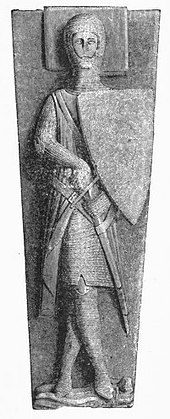
Henry, Prince of Scotland ca 1114-ca 1152
|
|
Aufrica of Scotland ca 1157-
|
Beatrice Say ca 1172-ca 1197
|
|
|
Humphrey V Bohun ca 1221-ca 1265
|
Humphrey VI Bohun, Earl of Hereford ca 1248-ca 1298
|
Humphrey Bohun, Earl of Hereford ca 1276-ca 1322
|
Margaret Bohun, Lady ca 1311-ca 1391
|
Margaret Courtenay ca 1334-ca 1395
|
Joan Cobham ca 1351-ca 1388
|
Joan Pole, Baroness Cobham ca 1370-ca 1434
|
Joan Braybroke, Baroness Cobham ca 1403-ca 1442
|
Edward Brooke, Sir ca 1420-ca 1464
|
Elizabeth Brooke ca 1441-ca 1503
|
Robert Tanfield ca 1461-ca 1504
|
William Tanfield, Esq ca 1487-ca 1529
|
Francis Tanfield ca 1512-ca 1558
|
Anne Tanfield ca 1536-
|
Elizabeth Vincent ca 1562-
|
Dorothy Lane /1589-
|
Richard Randolph ca 1622-ca 1678 
|
William Randolph, Col ca 1650-ca 1711 (Immigrant to VA)
|
Thomas Randolph, Col ca 1683-ca 1730
|
Mary Isham Randolph ca 1716-ca 1772
|
John Keith ca 1735-/1809
|
Susanna Keith ca 1767-ca 1858
|
Sarah Furr ca 1780-ca 1835
|
Maria Newlon ca 1803-ca 1851
|
Mary Newlon Neely ca 1825-ca 1893
|
John Battelle Hart ca 1860-1940
|
Edward Hart ca 1894-1949
|
Mary Isabelle Hart 1919-2005
|
Catharine Louise Wilson 1952


There are many different ways that we descend from St. Margaret, these are just the easiest to present.